Tuesday, February 26, 2019

The 3 Best Batteries For An Off-Grid Energy System

Pin ngoài lưới ngân hàng pin tốt nhấtIt’s the question that anyone using alternative energy inevitably asks at some point…

What are the best batteries for an off-grid energy system?
Because of the falling prices of renewable energy systems, more and more people are looking to use alternative energy sources as a way to:

  • Save money
  • Become more energy independent
  • And break their dependence on the big energy companies
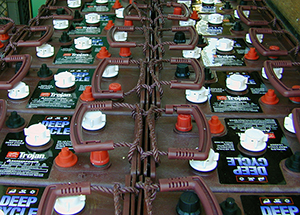
Solar Battery Bank With Reconditioned BatteriesHowever, installing a renewable energy system, in most cases, requires you to make a considerable initial investment that you won’t get back for several years.

One of the biggest expenses associated with alternative energy systems is the batteries in the battery bank.

So choosing the correct batteries for your off-grid system is crucial (and keeping the batteries alive as long as possible is also critically important)!

You Don’t Have To Buy New Overpriced Batteries

Before we tell you what 3 batteries we recommend for your alternative energy system’s battery bank…

It’s important to first note that you don’t have to buy the 3 batteries we recommend brand new.

Instead, you can use the EZ Battery Reconditioning program to:


  1. Get old or used batteries for free (or dirt cheap)
  2. Recondition them back to “like-new” condition
  3. Then use those reconditioned (like-new) batteries in your alternative energy system’s battery bank INSTEAD of buying new overpriced batteries

Doing this will will save you a considerable amount of money when building a battery bank and it helps make alternative energy accessible to those with a tighter budget!

But that still leaves the questions…

What are the best batteries to use in your solar power, wind power, or other alternative energy system?

In this blog post we’ll try to answer that question in a very simple and straightforward manner.


    Here’s what we’ll go over:
    Lead Acid-Batteries VS. Other Battery Technologies in a battery bank
    Deep Cycle vs. Shallow Cycle Batteries in a battery bank
    Flooded Lead-Acid Batteries (FLA) VS Sealed Lead-Acid Batteries (SLA) in a battery bank
    And finally, which 3 Batteries we recommend for your residential off-grid energy system (based on the criteria we go over in this article)

Lead Acid-Batteries vs. Other Battery Technologies


Many of the batteries that are used in renewable energy systems were originally designed for other purposes. The most prominent example of this is the lead acid battery which has dominated the industry for a long time.

Deep cycle lead-acid batteries have proven to be one of the best (and most affordable) battery types for alternative energy system battery banks for these reasons:
  • They’re able to withstand frequent discharging,
  • They’re cheaper than other kinds of batteries,
  • They have more rugged durability,
  • They deliver more consistent performance than other batteries.
The fact that they are widely produced also means that they are relatively easy to replace if a battery in your battery bank needs replacing.

It should be noted though, that as of late, lithium ion batteries for residential alternative energy systems, like Tesla’s Powerwall, have been gaining ground – but the initial investment into lithium ion batteries is still much more than the initial investment into lead-acid batteries.

The Powerwall may eventually change this but at the moment deep cycle lead-acid batteries are the cheapest and most practical solution for a home battery bank.


Deep Cycle vs. Shallow Cycle (Car) Batteries

Back when the renewable energy industry was still picking up steam, people that wanted to go completely off the grid would often have to improvise and make do with car batteries. However, car batteries were never built for this purpose and shouldn’t be continuously drained and recharged (which is what they need to do in a solar panel or wind turbine system).

Car batteries are supposed to be used only for starting and ignition. If you take a look inside one, you will see that they have a large number of thin plates.

These plates have a big total surface area that can facilitate a large number of chemical reactions. When you start your car, these reactions produce the sudden burst of power that is needed for ignition.

Deep cycle batteries on the other hand, have thick lead plates that don’t give much room for chemical reactions. Though they produce less current, they are designed to do so for a much longer period of time.

In essence, car batteries are “shallow cycle” batteries that will quickly burn out when used as storage for renewable power.


Flooded Lead-Acid Batteries  (FLA)  VS  Sealed Lead-Acid Batteries (SLA)

Before telling you what three batteries are best for alternative energy system’s battery banks, it should be made clear why flooded lead-acid batteries (FLA’s) are better for renewable energy than sealed lead-acid batteries (SLA’s).

One of the reasons that some people favour SLA’s is because they require little maintenance. Unlike FLA’s that need to be checked regularly for water level, SLA’s that are used properly can be left alone.

However, sealed lead-acid batteries have two big flaws: they are sensitive and wear out quickly. So if you’re planning on using your solar panel or wind power system every day, this will eventually pose a problem.

So, here are the categories of flooded lead-acid batteries that are best for an off-the-grid power system:

The 3 Best Batteries

So now that we know we want a lead acid battery, that’s flooded (FLA), and also has deep cycle properties …here are our 3 favorite batteries for an off-grid system’s battery bank:

1) Golf Cart Batteries

Golf Cart Batteries

Golf cart batteries are the most widely manufactured batteries on this list.

They also work great in an alternative energy system application. So it’s no surprise that they’re one of the most commonly used batteries in battery banks for renewable energy systems.
Even though the five to six year life span of golf cart batteries may seem relatively short, golf cart batteries more than make up for their deficiency in this area by being extremely durable and cheap (you can also use these 7 tips to extend the life of golf cart batteries).

In addition, golf cart batteries can also be found almost anywhere, making them a great choice for battery banks.

If you really want to build a high quality but inexpensive battery bank one of the best options is to:
Get old or “dead” batteries from golf courses or golf cart shops for free …or dirt cheap (just call them and ask if you can have their old batteries probably lying around and cluttering their shop)
Then recondition those batteries to like-new condition with the EZ Battery Reconditioning program
Use those reconditioned batteries in your battery bank


2) Industrial or Forklift Batteries

Forklift Batteries

A battery bank that uses one or more industrial batteries follows the opposite philosophy of a golf cart battery bank. Instead of relying on multiple strings of smaller batteries, you use a few or even one battery to store all of your energy.

Because these batteries aren’t usually manufactured to standard dimensions, you will have to have one made that is just right for your needs.

Or you can try to find an old industrial or forklift battery that’s the correct size for your system and use that.

Like golf cart batteries, there are sometimes ways to get free or cheap forklift batteries.

One way is to call up or visit industrial companies and see if they have old or “dead” forklift batteries. Offer to dispose of it for them or pay them a little bit. If they agree, you can then recondition the battery and use it instead buying a new pricey industrial battery.

But if you choose to get a new custom made battery instead, you should expect to pay quite a bit. But the good news is these types of batteries are typically built to last 15 to 20 years.

Other thing to consider are:
These bigger batteries will be heavier and more difficult to move around.
There may be advancements in battery technology that could make the battery obsolete in years to come.

But if you don’t mind making a significant investment upfront (anywhere from $2,000 to $10,00) and are alright with spending time keeping your batteries in top condition, then industrial batteries might be right for you.
 

3) L16 Batteries

L16 batteries for Solar
If you want batteries that have a little more capacity than golf cart batteries but don’t want to spend on industrial batteries, L16 batteries are a good middle ground.

These flooded lead-acid batteries were originally designed for supermarket floor scrubbers.

The good thing with these batteries is that they last a bit longer than golf cart batteries – about six to eight years. However, they are often twice as heavy and the 6-volt models can be twice as expensive.
Conclusion
Different homes will have different power requirement and will need battery banks that are sized accordingly.

If you build a battery bank using any of the three batteries mentioned above, you should be able to create a battery bank that is just right for your needs.

There are some exciting new developments in the battery world for alternative energy. These new products should be entering the market over the next couple years, like the lithium ion Tesla Powerwall. But at this time, our three favorite batteries for residential off-grid, alternative energy systems are golf cart batteries, L16 batteries, and industrial batteries.

And if you’re interested in saving money on your battery bank, you can use the EZ Battery Reconditioning program to learn how to:
Get old or “dead” golf cart batteries, L16 batteries, or industrial batteries for free or dirt cheap
Recondition them back to 100% of their working condition
Use those “like-new” batteries instead of buying new overpriced batteries to save a lot of money!

Good luck with your battery bank! And Happy Battery Reconditioning!
7 Ways To Prolong The Life Of Deep Cycle Lead-Acid Batteries

Ngân hàng ắc quy axit chì chu kỳ sâu 12 v

If you use an off-grid alternative energy system, you will need a battery bank with deep cycle batteries.

The most common deep cycle batteries used in off-grid energy systems are (deep cycle) lead-acid batteries because they’re reliable, affordable, and able to repeatedly deeply discharge and recharge.

But a lot is asked of deep cycle lead-acid batteries in off-grid energy systems. The regular deep discharging then recharging they have to perform puts a lot of stress on the batteries.

But if you take proper care of the batteries …and also do a few tips and tricks we’ll teach you in this article, you can maximize the lifespan of your deep cycle batteries.

In this article, we’ll not only show you our top
 7 ways to prolong the life of your lead-acid deep cycle batteries…
We’ll also point out some of the most common mistakes we see people making when they use lead-acid deep cycle batteries in their off-grid energy system (so you don’t make the same mistakes)!


The Battery Bank Is The Achilles Heel Of Solar/Wind/Off-Grid Energy Systems


Before we give you our top 7 tips and tricks, we want you to know why this information is important…


One the most expensive parts of an off-grid energy system is the battery bank.


And the batteries are typically one of the first things to fail in a system.

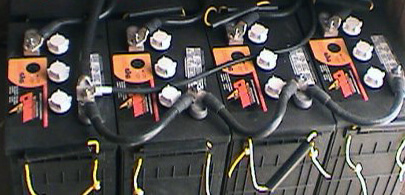
Solar Battery Bank With Reconditioned BatteriesImproper battery care often kills the batteries in the battery bank well before their time. This forces people to buy new expensive batteries and also cripples their off-grid system until they replace the dead batteries.
So proper care is critically important so you prevent premature aging of your batteries and maximize their lifespan.

Quick Tip: If your deep cycle lead-acid batteries do die ...or if you just want to save money on your battery bank, you can:
Get old batteries for free (or dirt cheap if you know where to look)
Recondition them back to 100% of their original working condition
And build your battery bank with those batteries instead of new pricey batteries.

7 Ways To Extend The Life Of Lead-Acid Deep Cycle Batteries

#1) Use High Quality Batteries
So this tip probably seems obvious, but the old adage ‘You get what you pay for’ holds true for most deep cycle batteries.

Cheap off-brand batteries from China are flooding the market right now and you want to avoid using these. They generally have a much shorter lifespan compared to quality batteries that you pay a little more for upfront.

High quality flat plate batteries can last between 10-12 years. The more expensive tubular plate batteries can even last as long as 20-25 years if maintained properly.

Paying for higher quality batteries upfront that last 10-25 years may seem expensive but it actually ends up being more expensive to buy cheap batteries …then replacing them every couple years (because they die early).

If you want to save money on your battery bank don’t buy “cheap” batteries, instead get quality used batteries and recondition them back to their original condition.


Don't know what batteries to use? If you don't know what kind of batteries to get for your off-grid energy system, read our article about the 3 best batteries for off-grid energy systems.

#2) Proactively Prevent Corrosion

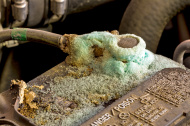
Even if you use the most expensive, high-quality batteries in your battery bank, it won’t be of much use if the batteries aren’t cared for and corrosion or acid is on them.

Extend lifespan of lead-acid deep cycle batteries
Before you assemble all of the components of your battery bank, make sure to individually coat the terminals, wire lugs, nuts and bolts with a non-hardening sealant.

You can also apply a thin coating of petroleum jelly to the battery terminals for some extra protection.

Lastly, seal exposed wire at a terminal lug using submersible rubber splice tape or something similar.

The reason all of this has to be done before assembly is because it ensures that all of the parts are equally protected. If you apply protective substances after you finish assembling the system, there is a good chance that dirt will get into small spaces that weren’t properly coated.

#3) Make Sure That the Battery Bank and PV Array are Correctly Sized

If you’re using a solar panel or wind power system, you should make sure that your battery bank is big enough to carry six to ten days of load.

This ensures:

You’ll always have a nice back-up supply of power.

And you’ll also be able to use your batteries a little more gently so you don’t have to consistently drain them.

#4) Fully Charge The Batteries Every Three Weeks

Lead Acid Battery MaintenanceAt the very least, make sure to fully charge your batteries every 3 weeks.
This reduces corrosion on the inside and ensures equalization.

#5) Keep Your Batteries at an Ideal Temperature

Because temperature extremes cause batteries to deteriorate much faster, it is important that you keep your batteries in a place where the temperature is relatively stable.

Aside from enclosed above-ground structures, you can also create a structure that is partially underground. This way the temperature in the structure will remain the same no matter what the weather is like outside.

In addition, make sure that the charge controller or inverter system has a built in temperature compensation feature. This is necessary because the charge voltage limit of a battery increases as temperature drops and decreases at temperatures increase.

#6) Don’t Install More Than Three Parallel Battery Strings


Ideally, your battery bank should only be made up of a single series of cells. The more cells that are included, the higher the chance of there being random defects. There’s also a greater chance of losing equalization, resulting in cells failing prematurely.

If you can’t stick to just a single series of cells in your battery bank, limit it to three parallel battery strings.

#7) Install a Renewable Energy System Digital Monitor

A renewable energy system monitor will help you keep track of the performance of your system (including the battery bank).

It will also help you troubleshoot any issue that comes up with your system so you can troubleshoot it before it turns into a bigger problem.

This will be particularly important if you are relying on the power from your off-grid power system and living in a remote area.

It will also help you maintain your batteries so you don’t have any surprise repairs that are costly and could have been avoided.


What else can you do to make your lead-acid deep cycle batteries last longer?

There are additional ways you can extend the life of your deep cycle lead-acid batteries. We cover all of these methods in the EZ Battery Reconditioning Program.

Reconditioning 12v deep cycle lead-acid Battery
Additionally, you can also bring old or dead lead-acid deep cycle batteries back to life again with the EZ Battery Reconditioning program.

This will allow you to give your old batteries a “2nd life” so you don’t have to buy new pricey batteries for your battery bank.

Or you can even build an entire battery bank with used batteries that can get for free (or dirt cheap), that you recondition with our system.

You can learn more here.

What Is An Equalizing Charge, Why Is It Needed, And How to Apply One To a Lead Acid Battery


Applying an equalizing charge to your lead-acid batteries will help them charge better and last longer.

So whether you are a battery reconditioning expert or a rookie, it is essential that you know what an equalizing charge is and how to apply one to a lead-acid battery, so you can get the most out of your battery.
This simple technique is something that needs to be done on a somewhat regular schedule, and is basically the controlled overcharging of the battery.

So in this article I will tell you:

Why an equalizing charge is needed


What problems an equalizing charge fixes in your lead-acid batteries

Two different ways to apply an equalizing charge

Which types of lead-acid batteries you should not apply an equalizing charge to

And how often you should apply an equalizing charge to your lead-acid batteries

Why Is An Equalizing Charge Needed?

An equalizing charge is needed because lead-acid batteries have sulfation issues that prevent proper charging.

How To Apply An Equalizing Charge

Sulfation takes place because small sulfate crystals form when a lead acid battery is in use. This is normal and not harmful; however, when the battery is only partially charged for a prolonged period, these sulfate crystals turn into stable crystalline and buildup on the battery’s negative plates.

When this takes place, it prevents the battery from taking on a full charge.
Additionally, an equalizing charge is needed for a second reason. Over time, cells in a lead-acid battery will become more and more unbalanced, with some cells overcharged and some undercharged.

But an equalizing charge will correct these sulfation and unbalanced cell issues.
 

Things that cause Sulfation in Lead-Acid Batteries:


When batteries are undercharged, they develop sulfation as a result.

Normal recharging of a deep cycle battery with a constant charge can also cause sulfation.

So some degree of sulfation is inevitable in lead-acid batteries.


Why Does An Equalizing Charge Help?

When you perform an equalizing charge you will break up the crystalline on the battery’s plates and allow the sulfate to re-mix with the sulfuric acid.

Additionally, an equalizing charge will ensure the cells operate with the same level of charge rather than having some cells that are overcharged and some that are undercharged.

Both of these factors will help the battery charge and perform better, as well as last longer.


How Is An Equalizing Charge Applied To The Battery?

The Easy Way (Use Automatic Equalizing Mode On A Battery Charger):
What Is An Equalizing Charge

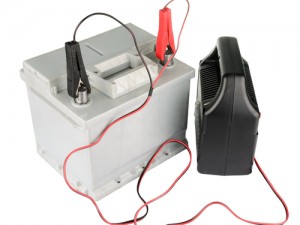
The easiest way to apply an equalizing charge to a lead-acid battery is to use a high-quality battery charger that has an automatic equalizing mode. Many new battery chargers have this setting so finding a quality chargerthat can equalize your battery shouldn’t be a problem.

If you do use a charger that has an equalizing mode, just make sure you leave your battery connected and powered up long enough to complete the equalization.

The Manual Way To Apply An Equalizing Charge To A Lead-Acid Battery:
If you do not want to buy a charger that does an equalizing charge automatically or if you just want to manually apply an equalizing charge yourself, you can follow these steps:

Step 1) Get out your battery charger (i.e. one does not have an equalizing mode).

Step 2) Get out your lead-acid battery and ensure that the battery is a FLA (flooded lead-acid) battery.

*IMPORTANT: Applying an equalizing charge to other kinds of batteries may cause damage and is not recommended. This includes SLA (sealed lead-acid) batteries like AGM (absorbed glass mat) and Gel batteries.
Step 3) Remove all electrical connections to the battery.

Step 4) Connect the battery to the charger.

Step 5) Charge the battery until it has reached a normal full charge.

Equalizing Charge For 12v Lead-Acid Battery
Step 6) At this stage the charge is usually automatically terminated by the charger.

Step 7) If your charger does not have an equalizing mode, you should now restart the charger once the initial full charge has been reached. Restarting the charger can be done by disconnecting AC power and reconnecting it. This process will extend the charge time for the battery by 1-3 hours.
Step 8) Gassing and bubbling of the electrolytes and other side effects will occur as a result of correct equalizing.

Step 9) Make sure you take specific gravity readings and the true state of the battery’s charge every hour during this process using a temperature compensating hydrometer.

*note: we show how to do this in our Battery Reconditioning course

Step 10) Make sure you also replace any water that is lost in the equalizing process.

*note: we show how to do this in our Battery Reconditioning course

Step 11) Check to see if the equalizing process has been completed. You will know if this has happened when the specific gravity values are no longer increasing during the gassing stage.

*note: If the charger ends the process automatically, before the equalizing charge has been completed and before the gravity readings are constant, then restart the charger and continue the equalizing until the gravity readings are constant.


How Often Should You Apply An Equalizing Charge To The Battery?


Different battery manufacturers recommend different intervals for when to apply an equalizing charge.

The most common interval is monthly. But other manufacturers recommend once every 6 months, while others recommend every 10 or 12 cycles.

So check with the battery manufacturer to see what they recommend and then follow that interval.

Additionally, make sure you are adding water to the battery every month and every time you perform an equalizing charge.


Is There More That Can Be Done To Maximize A Lead-Acid Battery’s Life?

Performing these equalizing charges and adding water regularly to a flooded lead-acid battery will extend the life of the battery and help it perform optimally.

But there’s a way you can extend the life of the battery even more and even bring a dead lead-acid battery back to life again…

Our EZ Battery Reconditioning course shows you exactly how to do this step-by-step.

The simple method we show you how to do in our program is quick, easy to do, and doesn’t require advanced tools or equipment.

So if you want to take it to the next level and bring any lead-acid battery back to life again …as well as many other kinds of batteries, check out the new presentation I just put up to learn more.
728x90

Can You Use Any Charger With Any Cell Phone, Laptop, Camera, or Tablet?

Can You Use Any Charger With Any Cell Phone, Laptop, Camera, or Tablet
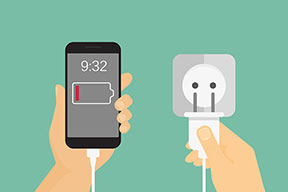
Every cell phone, laptop, and tablet seem to come with their own charger. If you’re like me, you’ve probably compiled quite a few chargers over the years. So the question becomes: is it safe to use a charger with your phone, laptop, camera, or tablet that isn’t the original manufacturer’s charger that came with the device?

Types of Chargers

In this article, we will focus on three types of chargers: laptop chargers, micro USB chargers (these are used with phones, tablets, and cameras), and Apple Lightning Connectors. While some devices have chargers with a slightly different head or charging cable, these are the most common.
Can you swap phone chargersLaptop chargers are fairly specific to the device they come with. However, there may be some generic chargers that boast the ability to be interchanged between laptops. This always requires changing of the charger “head” and may not be the optimal charging amperage or voltage for your device.
Micro USBs are theoretically designed to be interchangeable, and are standard in most smartphones, Android devices, and tablets. Micro USB chargers typically have the same voltage, but may draw different amps. I’ll explain this further later and how to know if the charger is safe to use (depending on its listed amps and voltage).

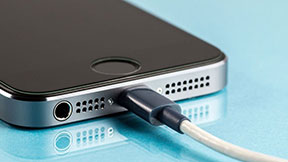
Apple Lightning Connectors are standard on all new Apple devices, including iPads and iPods. For older devices with a 30-pin charge port, a connector can be used to charge with the Lightning Connector.

The Plugs Must Be The Same

Can You Use Any Charger With Any Cell PhoneIn order for a charger to be used on a different device, it’s important that the plug of the charger (the “head”) fit securely into the charging port of the device. Micro USBs are the same across the board as far as charging heads, while laptop chargers are often specific to both make and model. However, the plug fitting securely is only one part of the equation.

How Voltage and Amperage Matter

Somewhere on the power brick of the charger you will find a label with the charger’s voltage (V) and amperage (A). For laptop chargers, this charging brick is often halfway down the charger and typically looks exactly like it sounds – a brick. For other types of chargers, like a smartphone charger, this information is usually found at the base of the charger, where it would meet the wall. For the device you are trying to charge, the voltage and amperage required will be found on the battery that came with the device or on the manufacturer’s website.
Use the correct charger for phone, laptop, camera, and tabletVoltage is how much power the charger will draw into the device, or how much is being “pushed” into the device by the charger. A phone will usually pull up to around 5V, while a laptop can pull up to 25V. A charger must equal the voltage required by the device. This is important: drawing too high a voltage could short out the device and potentially even start a fire, while too low a voltage will fail to charge the battery.
Amperage is how quickly power is “pulled” into the device, or how much power is used by the device. The amount of volts will never change, but the amount of amps that the device pulls may change depending on how hard the device is working. The number that you find on the battery that came with your device will be the max amount of amps that can be pulled by the device. The number found on the charger is how many amps can be pulled at once. In order to exchange chargers, the amp number on the charger must equal or exceed the amp number listed on the device’s battery. If a device is paired with a charger that cannot support the amp requirement, it can burn out the power supply and kill the device.

So if you have a modern USB device (smart phone, tablet, or camera) you can plug into a high-amperage USB port and enjoy faster charging (as long as the voltage is equal). *Site Note: if you have an older device, it may not work with USB ports that employ the new Battery Charging Specification.

If The Micro USB  Charger’s Voltage Is Not 5v…

Some devices may have their voltage listed with a plus/minus on it like this: 5v +- 5%. If this is the case, you can use a charger rated at 4.75 to 5.25v because that rating is telling you is that the device can take 5v minus 5% of 5v = 4.75 volts OR 5v plus 5% of 5v = 5.25 volts. So this means anything between 4.75 t0 5.25v is safe to use (as long as the amperage of the charger is equal to or higher than the device’s listed amperage).

An interesting thing to note is all chargers supply a higher voltage than the batteries they charge. That is pretty much how they work. There has to be a voltage differential to produce the necessary current flow in the correct direction to charge the battery. If you look at your car, it has a 12V battery, but typical alternators provide 13.8 to 14.4V charging voltage to the battery.


Stay Away From Cheap Knockoff Chargers

Use different laptop charger with laptopThe problem with knockoffs, particularly cheap knockoffs, is that they often don’t support the power requirements of the device, or are not built to maintain a steady flow safely. This can cause damage to the device but can also pose a safety/fire hazard. Overall, it’s best to stick with the charger designed for the device you are using.

Now You Know How To Safely & Effectively Swap Chargers

I hope this article was able to help you. Now you know how to safely and effectively use a charger that did not come with your smart phone, laptop, camera, tablet, or other device. Make sure you follow what we said and you should be good to go!

But what happens if you battery ages and isn’t performing well anymore? Well, you have to use other methods and actually recondition it! And that’s what we show you how to do in the EZ Battery Reconditioning program. So if your phone, laptop, car, truck …or any other type of battery is aging or dead, check out this video to learn how you can easily reconditioning your batteries yourself… at home!

728x90

How To Pick Out The Best Battery For a Solar Panel System, Battery Bank, or Off-Grid System

Pin tốt nhất cho hệ thống pin mặt trời

Have you ever wondered how to pick out the best battery(s) for your solar panel system (or off-grid energy system)? Or have you wondered what makes one deep cycle battery better than another? If so, this article will answer these questions and give you specific things to check on before buying your new battery (to ensure you get the most bang for your buck)!

When choosing a battery (or batteries) for your solar panel system, there are three categories of batteries that work best. So in this article we will:

Part 1) Quickly compare the three main types of solar batteries (lead acid, saltwater, and lithium).

Part 2) Compare the components of batteries, such as: depth of discharge, capacity and power, efficiency, battery life, and manufacturer.

By the end of this article you will know exactly how to pick out the best battery for your solar system! So let’s get started…

Part 1) The Three Best Types Of Batteries For Solar Systems:

The best type of battery for your solar panel system will depend on what you’re looking for. There are three battery types that work exceptionally well; however, each battery type has pros and cons. So the first decision to make is the type of battery that will fit your system.

Lead Acid Batteries

Lead acid batteries are among the longest-used and most reliable batteries in existence. They are the cheapest option but you trade cost for battery life and depth of discharge. But for homeowners needing lots of storage for a lower cost, or if you are just making the move to a solar system, lead acid may be a very good option.

Saltwater Batteries

Saltwater batteries are more expensive than lead acid batteries, but also have a greater lifespan. Unlike lead acid batteries, saltwater batteries are essentially brand new to the market and remain both somewhat untested and harder to come across. Of the three types of batteries, saltwater has the greatest depth of discharge, so you’ll get the most output per charge before needing to recharge.

Lithium Batteries

Lithium batteries are the most expensive and the longest lasting of the three types of solar batteries. Their depth of discharge is less than that of a saltwater battery, but more than that of a lead acid battery. Comparing all three options, the lithium battery is probably the highest rated, but also the least accessible cost-wise.

Part 2) Compare the components of batteries

Once you’ve picked the best battery type for your solar panel or off-grid system (that meets your system’s needs), there are components to explore to find the ideal battery for your system.

Cost

Cost is probably one of the more obvious components. But the old saying, “you get what you pay for” holds true when buying batteries as well. In some instances though, certain batteries may be overkill for your system so the most expensive battery may not be the best choice always.

Battery Life and Warranty

For most systems, a battery will cycle daily, meaning it will charge and drain regularly. With each cycle, the battery’s ability to hold the same charge lessens slightly. So one component to consider is the warranty on the battery that guarantees a certain number of cycles of useful life.

Depth of Discharge

Depth of discharge is how much you can drain the battery down before needing to recharge the battery without harming its life. Certain solar batteries can be depleted further than others, allowing for more use between charging. Essentially, a battery with a 90% depth of discharge per cycle will provide more battery power per charge than a battery with less.

Capacity and Power

Measured in kilowatt hours (kWh), capacity is the amount of energy a battery can store over time. More literally, capacity is how much energy (measured in kW) a battery can store over time. The more capacity a battery has, the more power it can store.

Power is how much energy a battery can provide at a given moment. A battery with both a high capacity and high power can run a large system for several hours; a battery with low capacity and high power can run a large system but only for a short time.

Efficiency

Efficiency is the amount of energy used compared to the amount of energy it took to store said energy. Batteries require power to charge and efficiency compares the energy taken to charge a battery with the amount of energy that the charged battery produces. The higher the efficiency, the more cost-effective the battery.

Manufacturer

This may not be a component most would consider, but it is something to pay attention to. As with other technology, there are both trusted brands and start-up brands. A trusted brand comes with known flaws and benefits; a start-up brand can perhaps have better technology, but can also have yet unknown technological issues. Depending on your system needs, you may decide to go with a well-reviewed company or one that is brand new to the market.

Part 3) What happens when your solar batteries start to die?

If you follow this article you should be able to compare batteries and pick out the best battery for your solar system’s needs.
But your new solar batteries won’t last forever. So what can you do? …and what can you do when your batteries actually die? Well, that’s where our battery reconditioning course comes in! You can use it to bring nearly any type of dead battery back to life again – including solar batteries, marine batteries, car batteries, forklift batteries, plus many other types. If you’d like to watch a new presentation about our course, you can see it here for a limited time.
729x90-gif2

7 Signs Your Car Battery Is About To Die And Needs To Be Replaced (or reconditioned)

7 Signs Your Car Battery Is About To Die And Needs To Be Replaced

7 Signs Your Car Battery Is About To Die And Needs To Be Replaced (or reconditioned)


Without a battery, your car simply isn’t functional. One of the most inconvenient things in life is when your car battery suddenly dies unexpectedly! This can delay you to work or make you miss an important appointment!

But the good news is… there are several ways to know if your car battery is on the verge of dying and needs to be replaced. And in this article we will go over 7 signs your car battery is about to die and needs to be replaced or reconditioned.Something to note before we begin...

Before we discuss these 7 critical signs, it's important to note that when experiencing problems with your car battery, be sure to check the battery connections and cables first because sometimes a faulty connection can appear to be a larger problem.

1) Slow Cranking

When turning the key, if your car turns over for longer than normal or takes a while to “catch,” it often is because the battery charge is low. While the starter can be the culprit, most of the time the battery is to blame. If this is happening regularly, it’s a good sign your car battery is going bad and it may be time to replace your battery or recondition it.

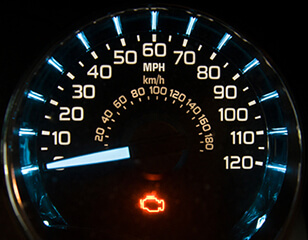
2) Check Engine Light/Battery Warning Light

Your check engine light could mean battery problems
The check engine light is always a good indication of something off with your vehicle. The battery power being weak will trip the check engine light. If your check engine light is on, be sure to check the battery power level.

Additionally, newer cars have a battery light, similar to the check engine light. This will only light up if there’s an issue with the battery.

3) Age

A car battery lifespan, in perfect conditions, is about five years (but can be much longer if you use our battery reconditioning course). If your battery is coming up on the five to six year mark it’s time to start looking for a replacement or recondition it to give the battery a new life.

4) Electrical Component Issues

One sure sign that your battery is beginning to fade is if electrical components are struggling to operate (such as lights, windshield wipers, power locks, and windows).

5) Swollen Battery Case

If you look under the hood and your battery case looks swollen, bloated, or malformed; it is a sign that temperature has affected the chemical components of the battery, shortening the lifespan.

6) Smell

If you smell sulfur or rotten eggs under your hood, this is often a symptom of leaking battery acid. This can damage other engine components if not addressed quickly. If you notice this, you can either bring your battery into a shop and have them look at it or you can use our reconditioning steps and do it yourself.

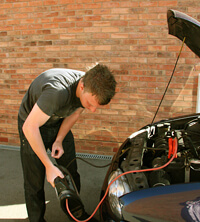
7) Multiple Jump starts Needed

Jump start car battery
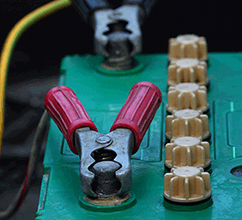
If you’re having to jump your battery to get your car started more than three times a week, it’s time to replace the battery or recondition it. Excessive jumping can also damage other systems, so it’s best to get the battery replaced or to fix the battery yourself.

Regular maintenance is important to extend the life of your car battery (and also your vehicle). And if your car battery is showing any of these 7 signs, you know that your battery should be replaced or reconditioned before your car no longer runs.

And if you want to take it a step further… you can learn how to double or even triple the life of your car battery by watching this presentation now.

728x90